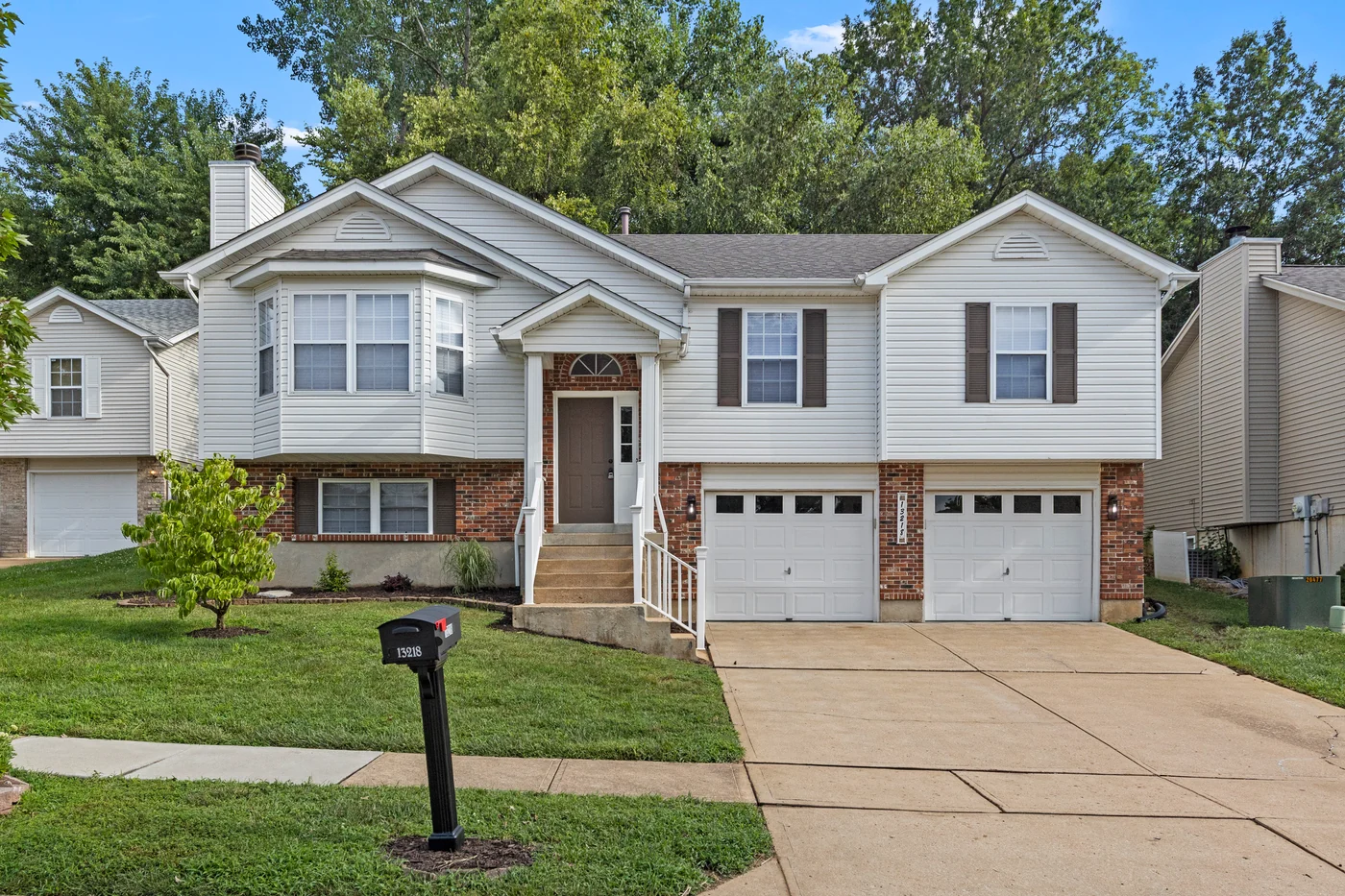

What the listing tells you
- The photos
- Beds and baths
- The asking price
What it can’t tell you
Zillow, Realtor.com, your agent’s email, a yard sign — the questions are the same wherever you found it.
Before You Buy, Check These 5 Things
A listing tells you what the property is. These five checks tell you whether it’s the right purchase, and each one leads to the St. Louis pages that answer it. Not ready to look at homes yet? Start with the complete guide to buying a home in St. Louis.
-
Check the address
- Neighborhood
- School district
- Municipality
- Local requirements
-
Check the price & payment
- Value
- Payment
- Taxes
- Closing costs
- Assistance
-
Check the house
- Inspection
- Systems
- Sewer and septic
- Known property risks
-
Check the financing
- Appraisal
- Loan requirements
- MHDC
- VA, FHA and conventional considerations
-
Check the deal
- Offer
- Negotiation
- Inspection
- Appraisal
- Closing
Then decide: make the offer, renegotiate, or walk away.
Zillow helps you find a house. STL Home Journey helps you understand it.
Check the price
Will it appraise?
“I love it. But is it actually worth that?”
Asking price and value are not the same thing. Before you decide what to offer, look at what comparable homes, the condition of the house and the local market say about the price. If an appraisal comes in below the contract price, the gap has to be resolved before closing.
- What a move-in-ready home actually costs in St. LouisSold-price examples across South County, South City, West County and St. Charles.
- South County neighborhoods by priceWhat each budget buys, neighborhood by neighborhood.
- How accurate is the Zillow Zestimate in St. Louis?How closely automated estimates track what homes actually sell for here.
Check the house
Will it pass inspection?
“The pictures look great. What am I not seeing?”
A home inspection isn’t technically pass or fail. What matters is what it uncovers, what those findings could cost, and whether they change what you’re willing to pay for the house. Listing photos show finishes. They don’t show the electrical panel, the major systems, the sewer line or septic system, or how a lender’s appraiser will view any of them. That doesn’t mean the house has a problem. It means these are worth checking before you’re under contract, while you still have options.
- Home inspection in St. Louis: what most buyers get wrongWhat an inspection covers, what it doesn’t, and how to use the report.
- St. Louis inspection red flags by property typeCommon failures, sorted by the kind of house you’re looking at.
- Lessons From a Sale: the septic that changed who could buy the houseA real Missouri deal where a failing septic system reshaped the buyer pool.
Check the address
What comes with the address?
“It’s a great house. What don’t I know about where it sits?”
Buying a house also means buying into everything attached to its address. Some of it changes across surprisingly short distances: two houses on the same block can be in different school districts, and a mailing-address city isn’t always the municipality that sets the rules.
- A school boundary
- A municipality, or unincorporated St. Louis County
- Local occupancy and inspection requirements
- Utilities: public sewer or septic
- A neighborhood
The place
- St. Louis neighborhoods guideNeighborhood pages covering schools, price ranges and who each area fits.
- St. Louis school districts comparedBoundaries, resale impact, and how to verify the district for a specific address before you write an offer.
- South County home buyer guideNine neighborhoods, the school districts and budget tiers.
- North County home buyer guideFifteen communities and 32 small towns, with 2026 prices, taxes and school districts.
- South City home buyer guideNineteen neighborhoods, SLPS and budget tiers.
Local rules and requirements
Occupancy, municipal inspection and sewer rules depend on the exact address, not the mailing city. Before you write an offer, confirm whether the property sits in a municipality or in unincorporated St. Louis County, because that decides whose rules apply.
- VA loans: what kills deals in St. LouisProperty requirements that can decide whether a financed offer holds together.
- How to screen homes before a VA offerWhat to check before the appraiser does.
Check the payment
What will it really cost?
“I can afford the listing price. Can I afford owning this particular house?”
The purchase price tells you what it costs to buy the house. It doesn’t tell you what it costs to own it. The real number includes the monthly payment, closing costs at the table, repairs the inspection turns up, and ongoing ownership costs like taxes, insurance and maintenance. Assistance programs can cover part of the upfront cost, if you qualify and the paperwork lines up.
Purchase price ≠ total decision.
- Down payment
- Monthly payment
- Closing costs
- Repairs
- Ownership costs
Missouri first-time buyer assistance
MHDC First Place & Next Step: how the assistance actually worksThe program offers down-payment assistance, but the real transaction involves income limits, lender fees, seller documents and a reservation deadline.
- Home buying power calculatorSee what your income buys across every region.
- Buyer closing costs in St. LouisWhat surprises people at the table.
Check the financing
Will the loan go through?
“I’m pre-approved. Isn’t that the hard part?”
Pre-approval is about you. Before closing, the lender also has to accept the house. The appraisal has to support the price, and FHA and VA loans carry property requirements that can flag issues a conventional loan might not. If you’re using MHDC assistance, its income limits and deadlines sit on top of the loan.
- Conventional vs. FHA loans in St. LouisHow the two loans differ at appraisal, what each costs over time, and which one gets offers accepted.
- When a VA appraisal comes back with conditionsYour three options, and what happens to earnest money under each.
- Mortgage pre-approval in St. LouisWhat lenders typically request and what can change your approval.
Check the deal
What happens after the offer?
“If I write the offer, what happens next?”
An accepted offer starts a sequence, and the steps affect each other. What an inspection finds changes what you negotiate, and what the appraisal says changes what the lender will fund.
- Offer
- Negotiation
- Inspection
- Appraisal
- Closing
- The complete guide to buying a home in St. LouisEvery stage in one place, from pre-approval to closing.
- How long it takes to buy a house in St. LouisThe full timeline, loan differences, local inspections, and where delays happen.
- How my buyer got $30,000 off before inspections startedA real negotiation on a house that sat for 90 days.
The other question
Shouldn’t your agent help you catch this?
Yes. Finding the listing isn’t the hard part anymore. Buyers can find houses from their phones. An agent’s value shows up after you find one you like:
- Asking better questions about the house and the address
- Noticing things that deserve a closer look
- Weighing the asking price against appraisal risk
- Understanding financing and property requirements
- Verifying local details like school boundaries and occupancy rules
- Structuring the offer around what you already know
- Explaining what inspection findings mean for the deal
None of that replaces a licensed home inspector, an appraiser, your lender, an attorney, a contractor or an engineer. An agent’s job is to help you recognize the questions, keep the process coordinated, understand what findings mean for the transaction, and know when you need one of those specialists.
Aren’t all agents basically the same?
Don’t judge an agent by the sales pitch. Ask what they actually do after you find a house you like:
- What do you look for when we walk through a house?
- How do you help me decide whether the asking price makes sense?
- How do you handle appraisal risk?
- How do you verify school boundaries and local requirements?
- What property issues could affect my financing?
- What happens if inspection changes how I feel about the house?
The answers tell you more than a sales pitch will. See how George works with buyers →
Next: how those questions have played out in George’s own St. Louis transactions.
The data tells you what usually happens. Real transactions show you what can happen.

STL Home Journey is a St. Louis real estate education resource created by George Kindler, a Marine Corps veteran and licensed Missouri real estate agent since 2013. It draws on 250+ transactions of real estate experience across the metro. 211 of them are individually documented from available records on the Transaction History page.
Coverage focuses on South County, South City, West County, Jefferson County, St. Charles and the surrounding market, with local data, case studies from actual deals and interactive decision tools.
- Lessons From a Sale: real St. Louis transactionsDeals broken down from pricing to closing: the decisions, tradeoffs and lessons the final sold price never shows.
- Transaction history by addressSearchable by year, city, role and price.
- About George KindlerBackground, license and how the site came together.
2026 St. Louis County-area sales
Spring buyers set prices that fall buyers won’t pay.
Part of the price drop is smaller homes selling in the fall—per square foot, prices slipped from $189 to $174. Showings are the average across 22 school districts; prices are the median of 2,868 qualifying single-family sales.
See the full St. Louis County data →Buying is only half the story.
If you’re selling a St. Louis home, the same transaction mechanics work in reverse: price, condition, timing, and what a buyer’s inspection and appraisal do to the number.
- All St. Louis seller guidesPricing, net proceeds, cash offers, expired listings and seasonal strategy.
- Why your home didn’t sellThe 20-question diagnostic, including no showings and no offers.
- When to lower the priceWith a real case study.
- Should you take a cash offer?What it costs, and when it makes sense.
- Selling in fall and winterSeasonal strategy that works.
- How George works with sellersThe process, start to finish.
- Owned your home for decades? Should you stay or go?What staying really costs, what you’d walk away with, where you’d go, and helping a parent decide.
More St. Louis guides and tools, by topic
Further reading grouped by what you’re trying to work out.
Buying
Neighborhoods and schools
Money and affordability
You found the house. Now make sure it’s the right decision.